
Replacing a Furnace or Air Conditioner
A new furnace or air conditioner is easier to choose well while the old one still runs and there is time to plan.
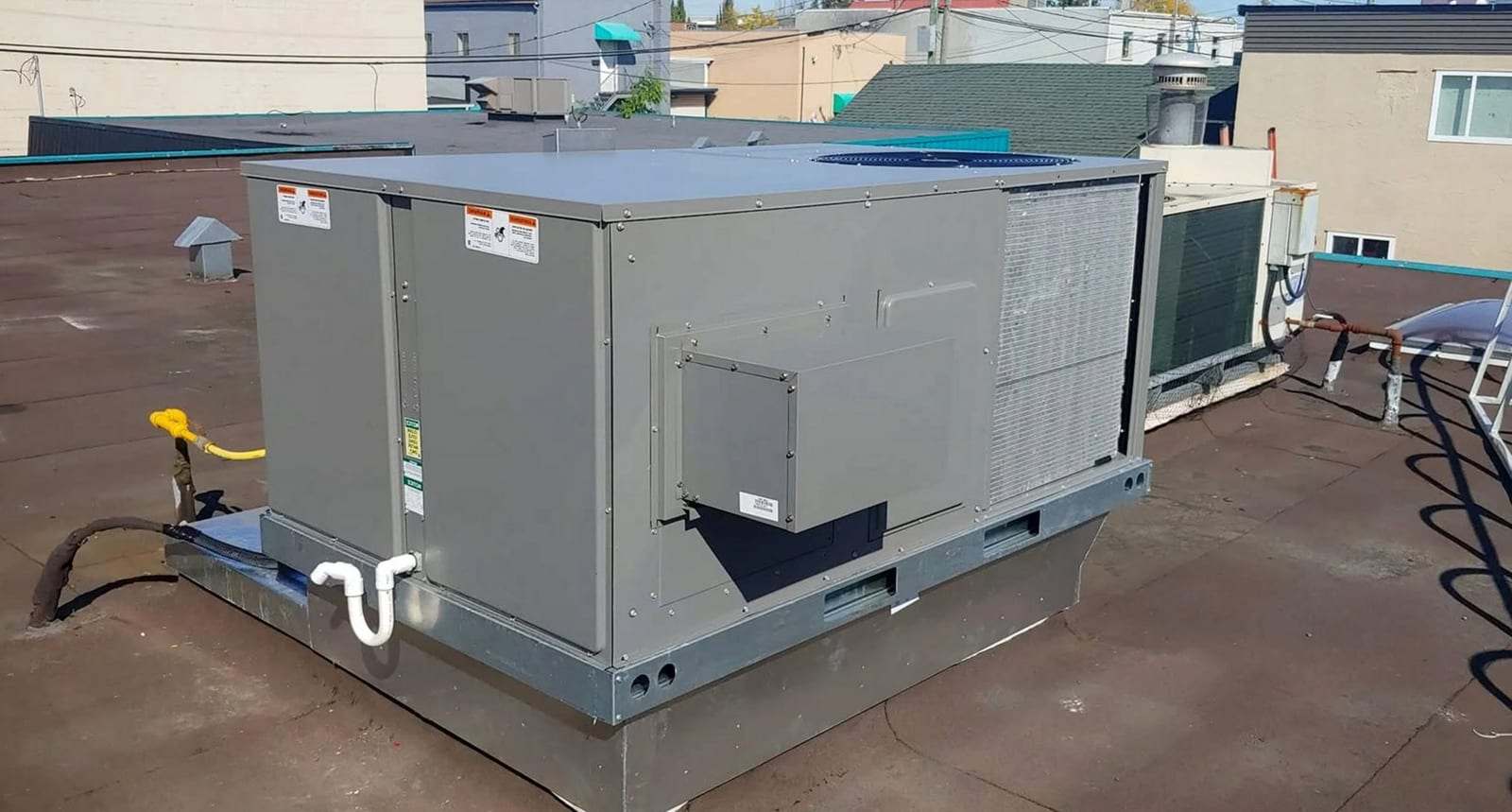
Most furnaces and air conditioners give warning before they need replacing: repairs come closer together, rooms take longer to warm up or cool down, and the next part to fail is no longer worth putting into old equipment. We replace furnaces and central air conditioners and install ductless mini-splits, in homes and rental units as well as shops and offices, where one rooftop unit often does both jobs.
When Replacing Beats Repairing
No single sign decides it. Age matters, but so do the part that failed, any safety risk and whether the house was ever comfortable with it. A repair on sound equipment is usually worth it; a large repair on equipment near the end of its life rarely is.
| Sign | What It Suggests | Repair or Replace? |
|---|---|---|
| A furnace past 15 to 20 years, or an air conditioner past 12 to 15 | Parts wear out together, and efficiency lags behind current equipment | Repair small things, but start planning |
| A cracked or rusted-through heat exchanger | Exhaust, including carbon monoxide, can leak into the air sent to the rooms | Replace the furnace in nearly every case, and stop running it |
| A failed compressor on an older air conditioner | The costliest part of the outdoor unit has worn out | Usually replace, with a matching indoor coil |
| Refrigerant leaks that keep coming back | A corroded coil, and on older systems a refrigerant no longer made | Lean toward replacing, especially on R-22 equipment |
| A worn igniter, flame sensor, capacitor or blower motor | One worn part on an otherwise healthy system | Repair: these are ordinary wear parts |
| Rooms that never reach the right temperature | Often the ducts or insulation rather than the equipment | Fix the airflow first; new equipment on the same ducts may not help |
| A breakdown every season | Repair bills adding up on equipment with little life left | Replace on your own schedule, before the next failure |
Information to Gather Before You Plan
These details make quotes quicker and easier to compare:
- Model and serial numbers from the equipment labels; the serial number often shows the year it was made
- Past repairs: what failed, when, and what was replaced
- Gas and electric bills from a full summer and winter
- Rooms that run too hot, too cold, humid or drafty, and when
- How the equipment is reached: stairs, doorways, an attic hatch or the roof
- Rooms without a supply register or return, and any loose or crushed ductwork you can see
- For rental units or several buildings: which system serves which unit, and when tenants can give access
Steps for Planning a Replacement
- Assess the current system. Pin down what is wrong and how old each piece is: a failed part on a sound furnace is a repair, while a cracked heat exchanger on an aging one points the other way.
- Learn the options. A like-for-like swap is simplest, but it is also the moment for a higher-efficiency furnace, an air conditioner sized for the house as it is now, or ductless heads for rooms the ducts never reached. The main types of heating and cooling systems differ in comfort and running costs for years.
- Compare quotes. Line up the same things in each: model numbers, how the size was worked out, what happens to the ductwork and whether removing the old equipment is included.
- Choose a schedule. Aim for a mild stretch of the year rather than waiting for the next breakdown, and for a rental unit, settle the date with the tenants.
Questions About Matching, Sizing and Timing a Replacement
Can I replace just the outdoor unit and keep the indoor coil?
Sometimes, if the coil is fairly new, the right size and built for the same refrigerant. Usually both are replaced: a mismatched pair loses efficiency and may fail sooner, and a coil built for R-22 does not suit newer refrigerants.
Will a new air conditioner work with my old furnace?
Usually. The furnace’s blower moves the air across the cooling coil, so it must push enough for the new unit, and the coil must fit the cabinet; too little airflow can freeze it. If the furnace is old too, replacing both at once means one disruption, not two.
Can the existing ductwork be reused?
Often, if it is sound and big enough for the new equipment’s airflow. Loose joints, crushed flexible duct and too few returns are worth fixing during the job, and a static pressure reading shows whether the ducts are choking the blower.
Should the new system be the same size as the old one?
Not automatically. The old unit may have been sized by rule of thumb, and the house may have changed: new windows, more insulation, a finished basement. An oversized air conditioner leaves the air clammy and cycles on and off; an undersized one runs nonstop in a heat wave.
When is the best time of year to replace a system?
Spring and fall. A day without heat or cooling is easy to manage then, and there is time to compare quotes instead of taking the first one offered during a breakdown. A tired furnace is best replaced before the first cold spell, an air conditioner before the first heat wave.
Narrow Stairs, Flat Roofs and Homes Without Ducts
Philadelphia rowhouses set some limits on a replacement. The furnace usually sits in a basement down narrow, steep stairs, so the new one has to fit through the doorway and down the steps. The condenser often sits on the flat roof, its refrigerant lines running down through the house; a new unit can reuse that route if the lines are the right size and sound.
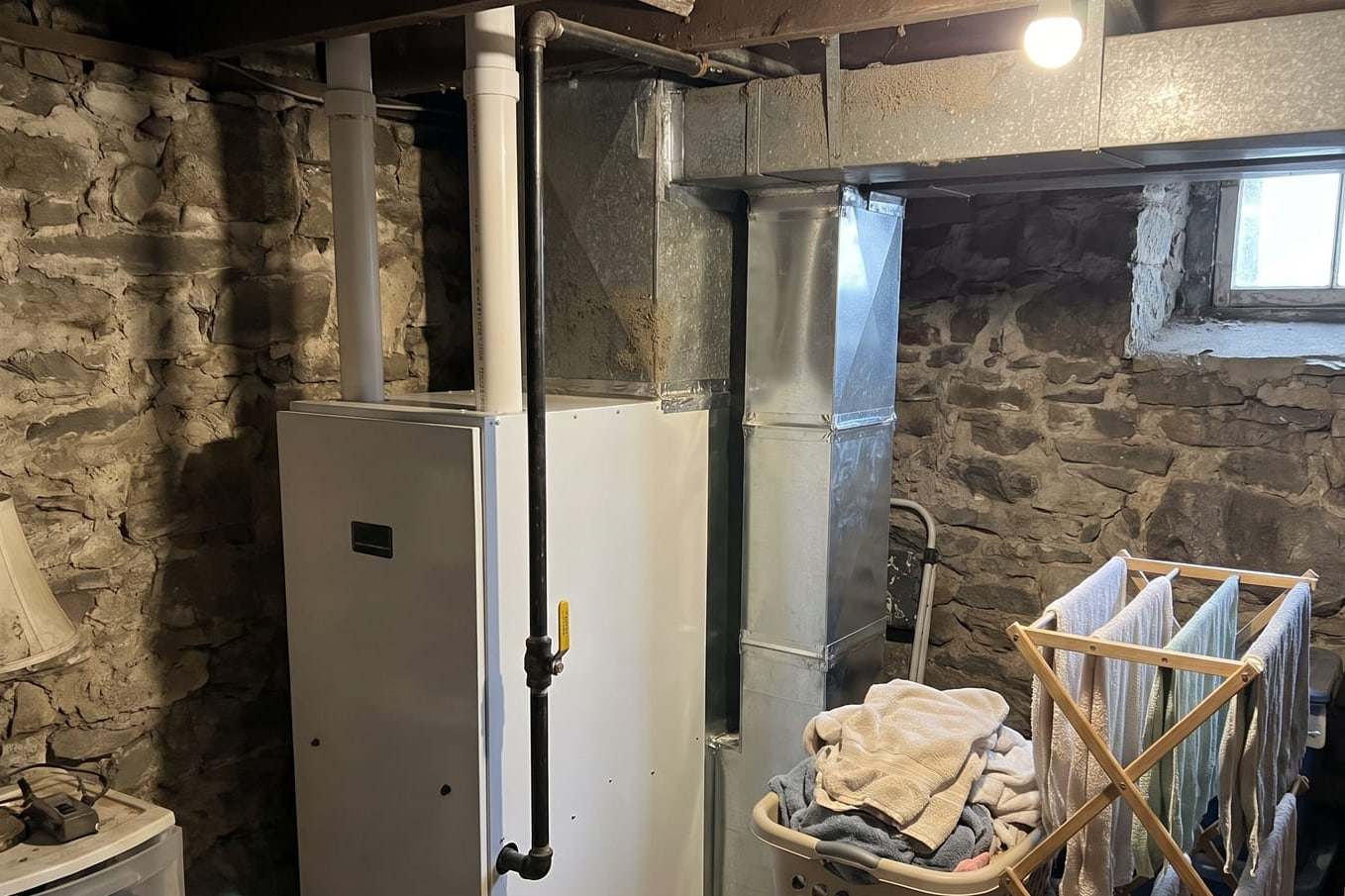
A high-efficiency furnace vents through plastic pipe instead of the chimney, and on an attached house that pipe leaves through the front or back wall, clear of windows and doors. A gas water heater left alone on the old chimney often needs a liner to draft properly.
Many older rowhouses, and the large stone twins of Wynnefield and Overbrook, are heated by a boiler and radiators with no ducts at all. There, cooling usually comes from ductless mini-splits: heads in the rooms, an outdoor unit on the roof or a back wall, and small refrigerant lines in place of new ductwork.