
AC Repair in Philadelphia
Central air conditioners and heat pumps that blow warm, freeze up, drip water or refuse to start.
AC repair covers central air conditioners and heat pumps running in cooling mode. Many breakdowns trace back to a few parts: a capacitor or contactor, a fan motor, a clogged condensate drain, a dirty coil or a refrigerant leak. We also track down weak airflow, rooms that never cool, and equipment that runs loudly or shuts off too soon.
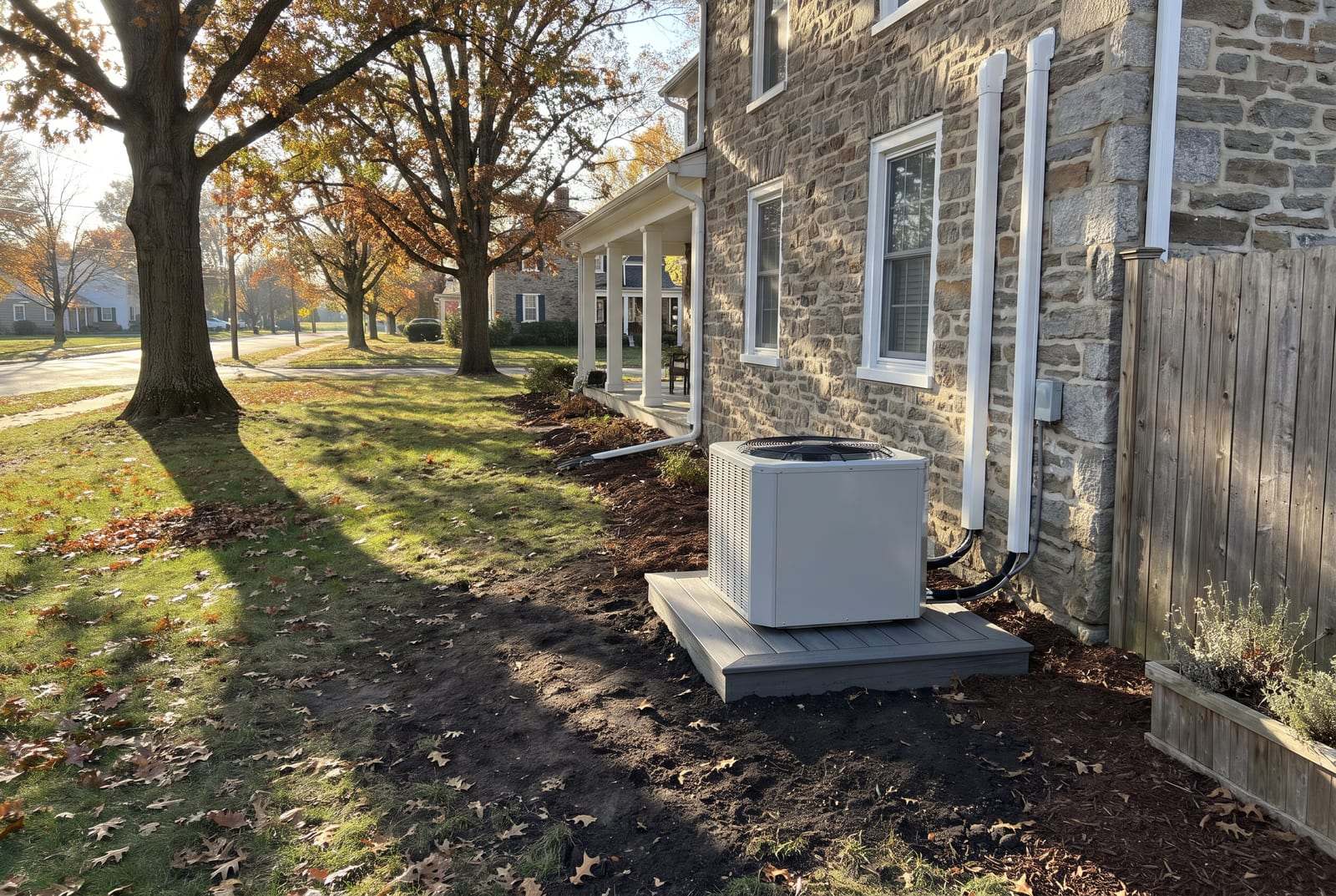
Warm Air, Ice, Water and Noise
| Problem | What You May Notice | Common Cause | Safe to Keep Running? |
|---|---|---|---|
| Warm air from the vents | Fan blows room-temperature air; the outdoor unit may hum or sit silent | Failed capacitor or contactor, tripped breaker, low refrigerant | Not if the outdoor unit hums with its fan still |
| Ice on the coil or copper line | Frost on the larger copper line, weak airflow, meltwater | Clogged filter, blocked return, low refrigerant, weak blower | No. Turn cooling off and run the fan alone |
| Water around the indoor unit | Puddles, a stained ceiling, a dripping ductless head | Clogged drain line, cracked pan, failed condensate pump | Only until the pan is emptied; off if water nears wiring |
| Short cycling | Starts, runs a few minutes, stops, starts again | Oversized unit, low refrigerant, dirty coil, badly placed thermostat | Briefly; constant restarts wear out the compressor |
| Grinding or screeching outdoors | Metal-on-metal noise, a squeal at start-up, a heavy rattle | Worn motor bearings, a bent blade, debris, a failing compressor | No. A worn part can take the motor with it |
| Will not turn on | Nothing happens when the thermostat calls for cooling | Dead thermostat batteries, tripped breaker, float switch set off by a full pan | Nothing is running; check the thermostat, breaker and pan |
Simple Things to Rule Out First
These take a few minutes and no tools:
- Check the thermostat. Cool mode, a few degrees lower than the room, fan on Auto. A blank screen usually means dead batteries.
- Look at the filter. A filter gray with dust starves the coil of air and can freeze it; replace it if light barely shows through.
- Check the breakers. Reset a tripped breaker for the indoor or outdoor unit once, and make sure the disconnect by the outdoor unit is on. If the breaker trips again, leave it off.
- Clear the outdoor unit. Pull away leaves and clippings. With the power off at the disconnect, rinse the fins gently with a garden hose, never a pressure washer.
If the air still comes out warm, match what you see to the likely causes of an AC that is not cooling.
Signs to Turn the System Off
Some faults get worse with every hour of running. Switch off at the thermostat, and at the breaker for anything electrical, and schedule a repair if you notice:
- A burning or electrical smell from the vents or the outdoor unit
- A breaker that trips again as soon as it is reset
- Ice on the indoor coil or the copper lines
- Grinding, screeching or banging outdoors
- An outdoor unit that hums while its fan stays still
- Water spreading across a floor or staining a ceiling
Why Refrigerant Runs Low
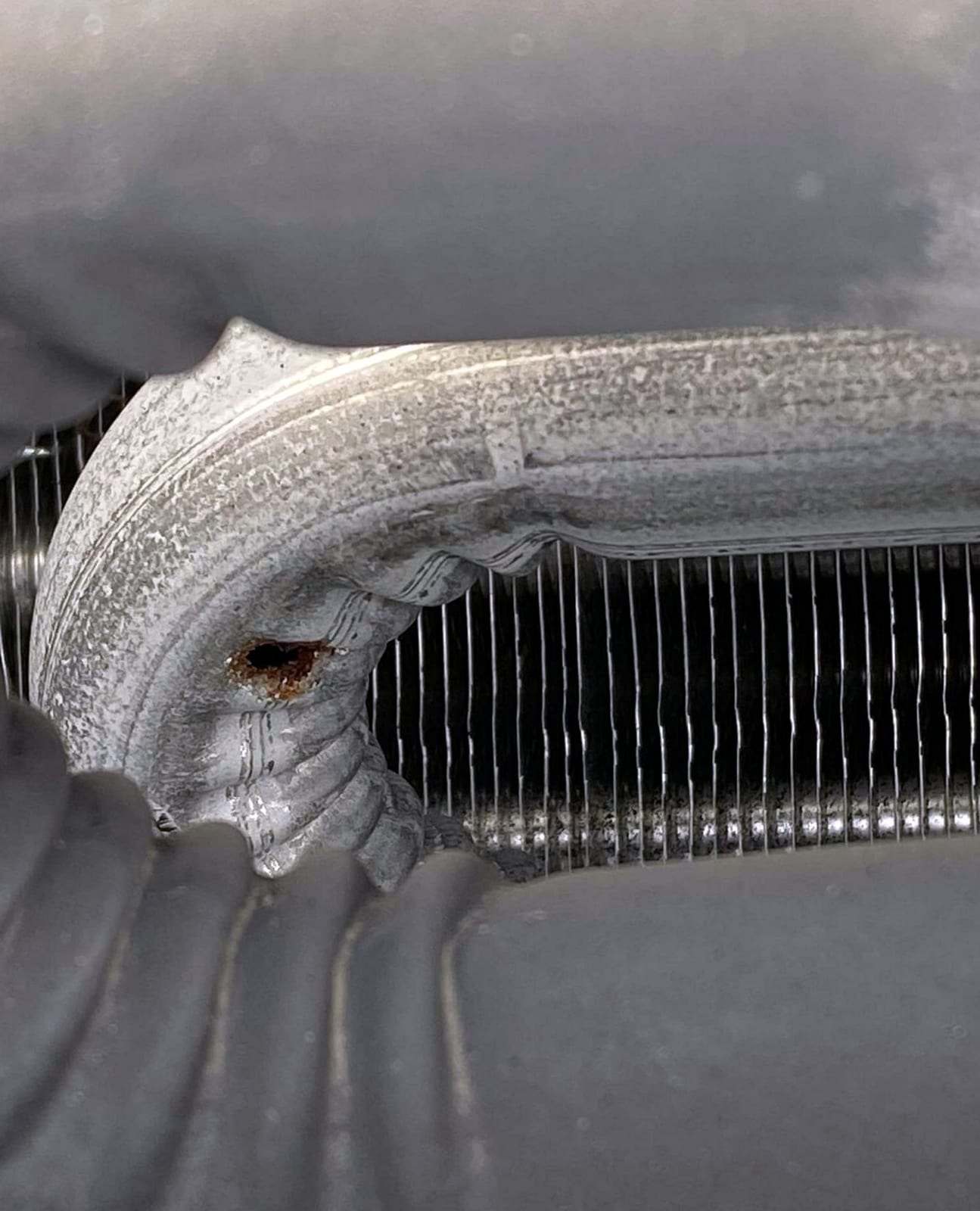
Refrigerant is not used up like fuel. It circulates in a sealed loop, so a system that is low has a leak. On the indoor coil, moisture and acids given off by cleaners, glues and building materials can corrode the copper until a pinhole opens, often at a U-bend. Leaks also start at brazed joints, valve cores and wherever a line set rubs against a wall or a roof edge.
A repair visit starts with tests, not a can of refrigerant: pressures, temperatures and electrical readings show where the trouble is, and you see what was found and hear the choices before work starts. A leak at a joint or valve can often be fixed, while a corroded coil is usually replaced, since corrosion rarely stops at one pinhole. On an older system, the cost of a new coil can tip the decision toward replacing the air conditioner.
Questions About a Struggling Air Conditioner
Can refrigerant just be topped up instead of finding the leak?
It can, and the cooling comes back for a while. But the leak keeps going, and in the meantime the compressor runs hot and the coil can freeze. Fixing the leak, or replacing the leaking part, is what ends it.
What should I do if the indoor coil freezes?
Turn the cooling off and set the fan to On, so air keeps moving across the coil; thawing can take a few hours. Change the filter if it is dirty. If the coil freezes again, low refrigerant or a weak blower is the likely cause.
Why is the compressor loud, or shutting off after a few minutes?
A clank at start-up, or a buzz followed by silence, often means a failing capacitor or contactor, or a compressor overheating and tripping its own safety switch. Switch off and have it checked: a capacitor is a small part, but a compressor run until it fails often means a new outdoor unit.
Why is water dripping from the indoor unit?
Cooling pulls moisture from the air, and it should leave through a drain line or a condensate pump. Algae clogs the line, pumps fail, old pans crack. Clearing the line usually stops it; switch off first if the water is near wiring.
Why is my ductless head running but not cooling?
Check the remote first: it may be set to fan, dry or heat. Then clean the filters behind the front panel. If the head still blows room-temperature air, the outdoor unit may not be running, or refrigerant may be leaking at a flare fitting.
Rooftop Condensers on Philadelphia Rowhouses
On an attached brick rowhouse, the outdoor unit often sits on the flat roof. Up there it bakes in full sun over hot roofing, collects leaves and grit, and is easy to forget until it quits. Reaching it can mean a roof hatch or a ladder, so know how you get onto the roof before a repair visit.
A house heated by radiators usually has no ducts to carry cool air, so its cooling comes from window units or ductless mini-splits. A ductless system needs the same care as central air: clean filters, a clear drain and a sound line set where it runs down the outside wall.