
AC Not Cooling: What to Check and When to Call
Safe checks for an air conditioner that runs without cooling, what each symptom points to, and when to switch it off.
When the air conditioner runs but the house stays warm, the cause may be as small as a wrong thermostat setting or as serious as a refrigerant leak. Some checks are safe for anyone and need no tools. Others belong to a technician, and a few symptoms mean switching the system off right away.
Start With What the System Is Doing
Each cooling symptom narrows the list of causes: warm air points one way, ice another, water on the floor a third.
Symptom Troubleshooter
Choose what the system is doing, then press Show Likely Causes.
Safe Checks Before Anyone Opens a Panel
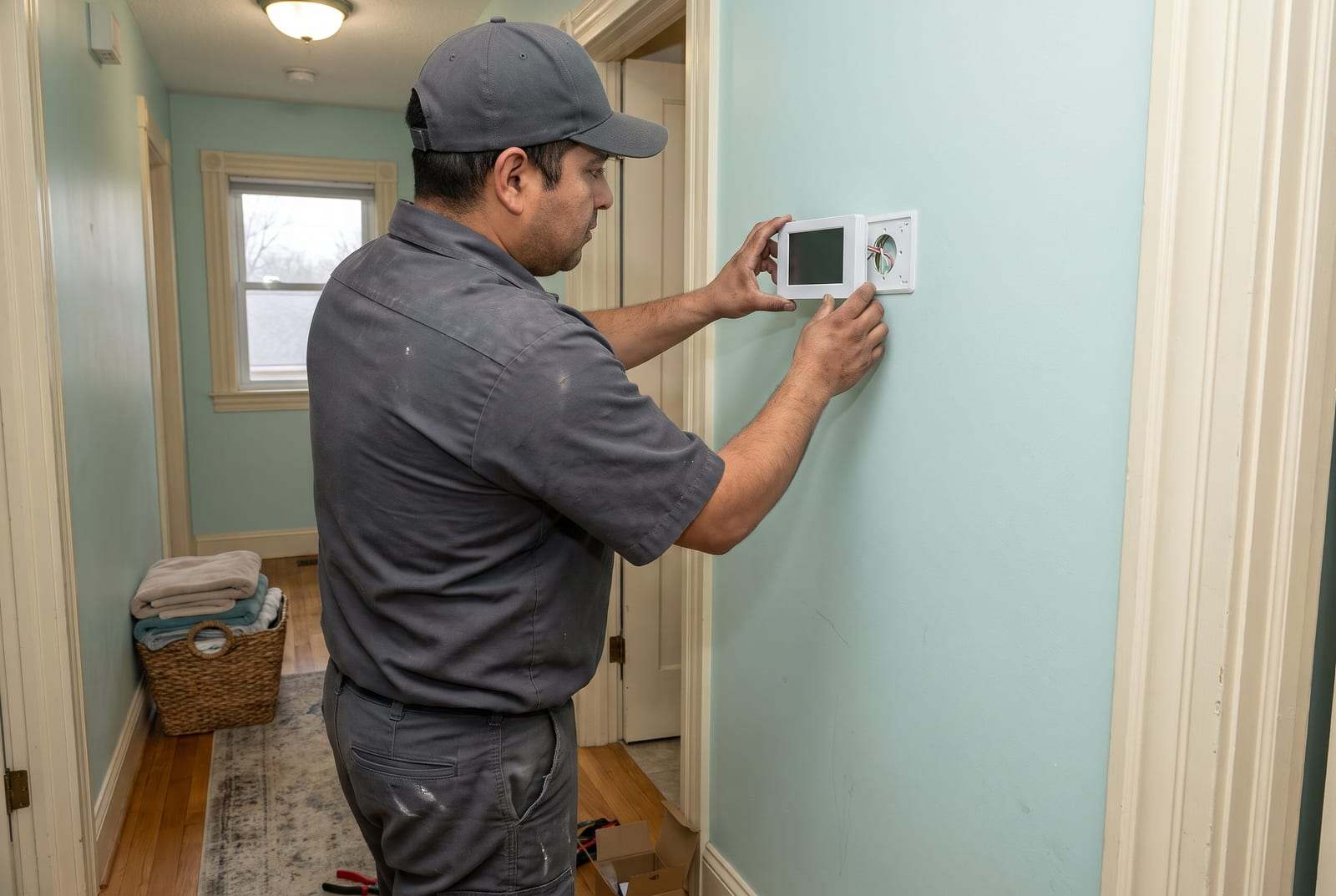
- Thermostat settings. The mode should read Cool and the fan Auto; a fan set to On keeps blowing between cycles, and that air feels warm. Set it a few degrees under the room temperature and allow five minutes for the compressor’s start delay.
- The air filter. Pull it from its slot. One matted with dust has been starving the coil; fit a fresh one before trying again.
- The breakers. Look for a tripped breaker in the panel and at the disconnect box by the condenser. One reset is reasonable; a second trip points to an electrical fault.
- The vents. Open closed supply registers and pull furniture and rugs off the return grilles; a system short of return air cools poorly and can ice up.
- The outdoor unit. Switch off the disconnect, clear leaves and cottonwood fluff from the fins and trim plants back about two feet; a gentle hose spray lifts the rest. On a rowhouse the condenser often sits on the flat roof: check it only if there’s a safe way up.
Still warm after all five? Set the thermostat to Off and leave refrigerant, capacitors and the compressor to a technician; running a struggling system only adds to the damage.
Symptoms, Causes and When to Stop
| Symptom | Likely Cause | Safe Check You Can Do | When to Stop and Call |
|---|---|---|---|
| Warm air from the vents | A thermostat set wrong, a breaker off, or a refrigerant leak | Confirm Cool and Auto; look at both breakers | The air is still barely cool after 15 minutes |
| Outdoor fan still, unit humming | A capacitor or fan motor that gave out, or a stuck contactor | Turn the system off, then check the breaker | Right away: the compressor overheats without its fan |
| Ice on the coil or lines | Too little air across the coil, or a refrigerant leak | Switch off until it thaws; put in a new filter | Ice is back within a day |
| Water near the indoor unit | Algae in the drain line, a rusted pan, a pump that quit | Switch off, mop up, check the pump’s plug | Water keeps coming or nears wiring |
| Short on-and-off cycles | A thermostat in the sun, or a system too big for the house | Replace the filter; move lamps away from the thermostat | Cycling goes on once those are ruled out |
| Weak airflow | A dirty filter, blocked returns, a loose duct, a slow blower | Open registers, clear returns, change the filter | One area gets almost no air |
| Grinding or banging | Dry motor bearings, a blade knocking, a compressor on its way out | Switch off; with the disconnect pulled, look for sticks | Any metal-on-metal sound |
Frozen Coils and Slow Refrigerant Leaks
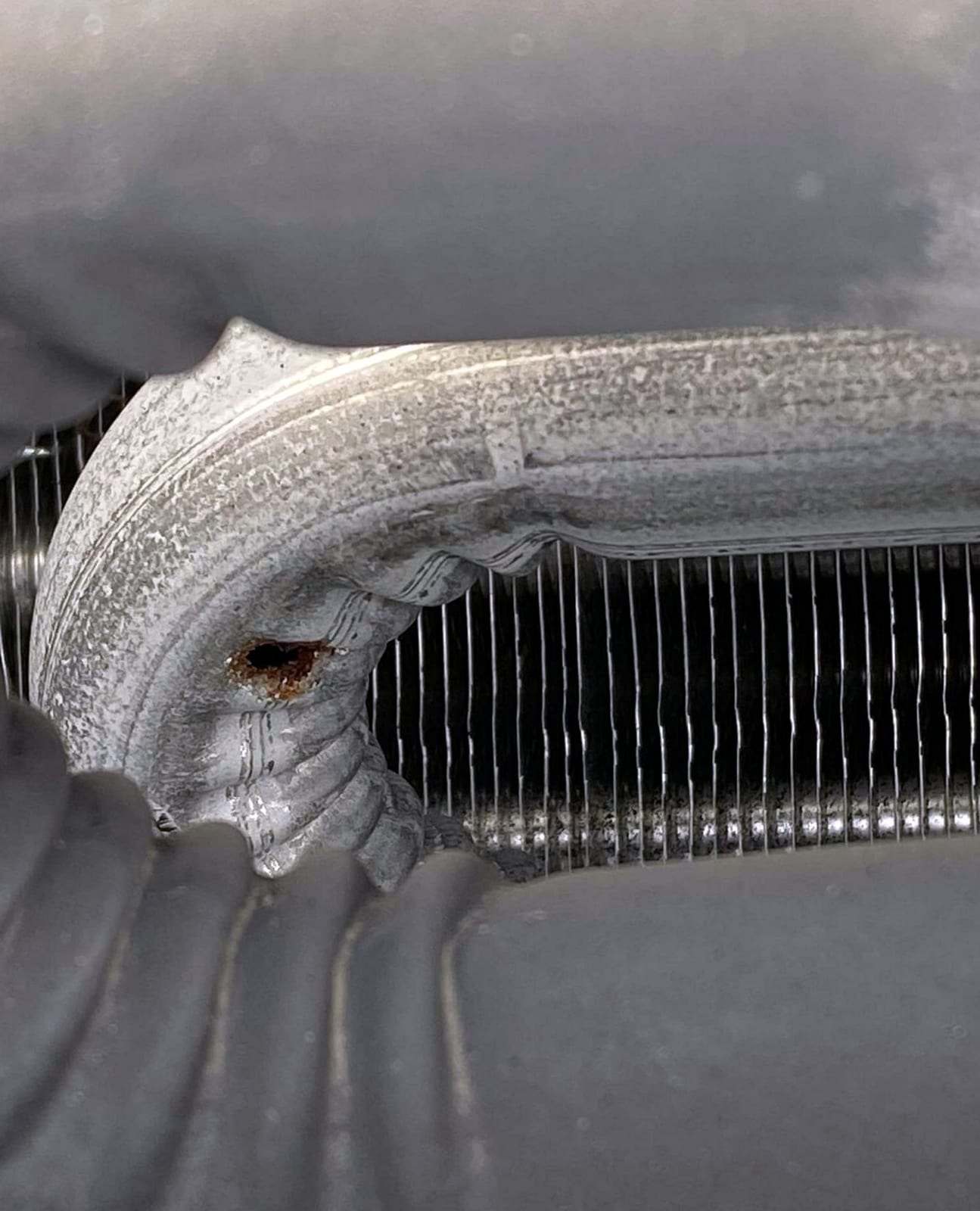
The indoor coil works by staying just above freezing as house air passes over it. Starve it of air, with a clogged filter, closed registers or a slow blower, or let the refrigerant run low, and it drops below freezing; ice builds until air barely gets through.
An air conditioner doesn’t burn through refrigerant the way a car burns gas, so a system that needs more has a hole somewhere. On older indoor coils it’s often a corrosion pinhole in a copper bend. Topping up without finding it only buys time; the lasting fix is what a proper refrigerant leak repair involves.
Questions About Ice, Fans and Rooms That Stay Warm
Why is the upstairs always warmer than the first floor?
Warm air rises, the top floor sits under the roof, and its ducts are the longest. In a rowhouse that roof is often flat and dark and bakes all afternoon. Blinds help a little; lasting fixes are a return upstairs, duct changes or a ductless head up top.
Why is there ice on the copper line outside?
The larger, insulated line carries refrigerant back to the compressor. Frost on it means the indoor coil is below freezing, usually from weak airflow or a low charge. Switch the cooling off until it clears, and if it returns, have the system checked before the compressor suffers.
The outdoor fan isn’t spinning but the unit hums. What should I do?
Turn the system off now. Humming with a still fan usually means a failed capacitor or fan motor, and the compressor overheats if it keeps trying to run. Capacitors hold a charge with the power off, so this is a technician’s repair.
Is it normal for the system to run all day in a heat wave?
On the hottest days, yes. Systems are sized for ordinary summer heat, so a healthy one may run nearly nonstop and let the house drift up a few degrees, then catch up after sunset.
Why does the air feel cool but clammy?
Cooling also dries the air, and drying takes run time. An oversized system cools fast and shuts off before it pulls much moisture out. A fan set to On blows water off the wet coil back into the house, so set it to Auto.
What to Note About a Cooling Problem
Before you call, jot down what you’ve seen:
- When it started, and whether suddenly or over a few days
- The thermostat’s mode, setting and reading
- Whether the outdoor unit and its fan are running
- Sounds: humming, clicking, grinding or banging
- Ice on the coil or lines, or water near the indoor unit
- When the filter was last changed
- Any breaker that tripped, and whether it tripped again
- The model number from the outdoor unit’s label, if it’s visible
With those notes ready, call or schedule a repair visit online.