
Seasonal Maintenance for Philadelphia Homes
What to handle yourself, what to leave to a technician and when, so the heat and the cooling are ready before the weather turns.
Heating and cooling equipment here works hard twice a year, through humid summer heat and again through the cold months. Many breakdowns at the start of a season trace back to something small, like a clogged filter or an outdoor coil matted with fluff. Heading them off takes a few minutes of homeowner care each month or season, plus a seasonal tune-up before summer and before winter.
A Calendar Matched to Your Equipment
Every setup needs a slightly different routine: a boiler has no filter, a heat pump works through the winter, and ductless heads have screens you rinse rather than replace.
Maintenance Planner
Choose your system and check what applies, then press Build My Calendar.
Seasonal Tasks and Who Handles Them
| Season | Task | Homeowner or Technician | Why It Matters |
|---|---|---|---|
| Spring | Rinse pollen and cottonwood fluff off the outdoor coil | Homeowner, power off | A matted coil can’t shed heat, so the compressor runs hotter and longer |
| Spring | Cooling tune-up: refrigerant pressures, capacitor, coils, drain | Technician | A weak part or slow leak shows up before the first heat wave, not during it |
| Summer | Check the filter monthly | Homeowner | Long run times fill a filter far faster than mild weather |
| Summer | Make sure the condensate drain flows | Homeowner | Humid days send a steady stream down the line, and a clog backs it into the pan |
| Fall | Heating tune-up: burner, flame sensor, heat exchanger, venting | Technician | Cracks and venting faults are safety problems to find before daily use |
| Fall | Test smoke and carbon monoxide alarms | Homeowner | Fuel-burning equipment is about to run for months |
| Winter | Keep snow off a heat pump and any side-wall furnace vents | Homeowner, after each storm | A buried coil can’t defrost, and a blocked vent shuts a high-efficiency furnace down |
Changing or Cleaning an Air Filter
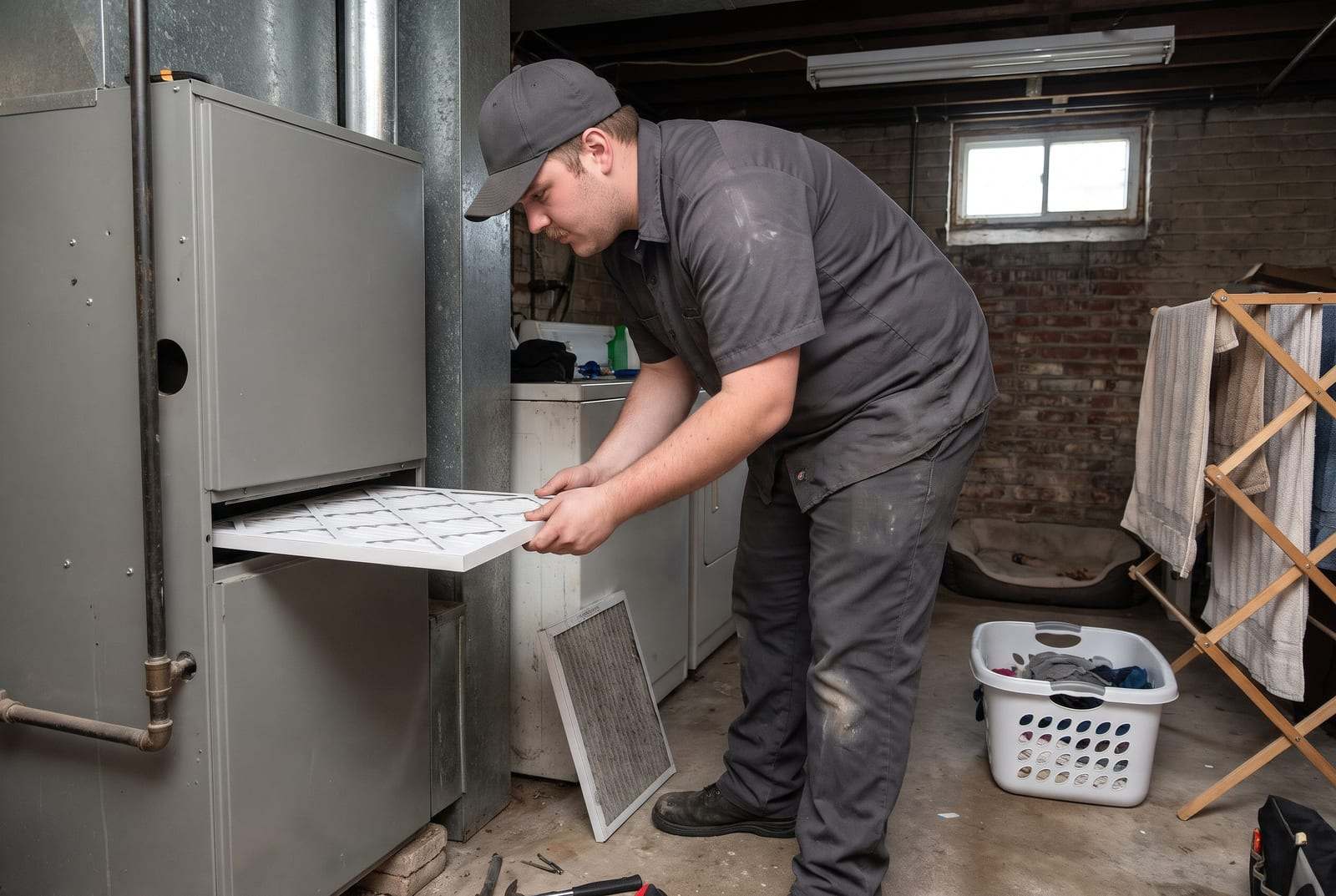
- Turn the system off. Set the thermostat to Off so the blower isn’t pulling dust past an open slot.
- Find the filter. It slides into a slot where the return duct meets the furnace or air handler, or sits behind a return grille.
- Read the old frame. The size is printed on the edge, with an arrow for the direction of airflow. Note both before buying.
- Slide the old filter out. Hold it up to a light. If you can barely see through it, change the next one sooner.
- Put the new one in, arrow toward the blower. It should sit snug, with no gaps at the edges.
- Close the cover and write the date. A date on the frame shows how long that filter lasted.
Ductless heads and window units use washable screens instead: lift the front panel, unclip the screens, rinse them in lukewarm water, let them dry completely and clip them back.
Questions About Filters and Tune-Ups
How often should the filter be changed?
Check it every month. A standard one-inch filter usually lasts one to three months, and a four- or five-inch media filter six months to a year. Pets, allergies, renovation dust and long summer run times all shorten that.
What MERV rating should I buy?
MERV rates how fine a particle a filter catches. MERV 8 to 11 suits most homes. MERV 13 traps finer dust and smoke but slows airflow, which an older blower or a one-inch slot may not handle, so ask before going that high.
Are washable furnace filters worth it?
They save buying filters, but most catch less than a pleated one, and they need a monthly rinse and a full drying before going back in, or they grow mold. A pleated filter changed on time usually does better.
When is the right time for a tune-up?
Spring for cooling, before the hot weather settles in, and early fall for heating, before the first cold night. A heat pump does both jobs, so it gets a visit in each season. Booking before a heat wave or a cold snap is easier than during one.
Does a boiler need a yearly check?
Yes, once a year before the heating season. A technician cleans and adjusts the burner, checks the flue and draft, and tests the safety controls: the low-water cutoff on a steam boiler, the relief valve and expansion tank on a hot-water system.
Spring and Fall Checklists
Before Cooling Season
- Put in a new filter before the first long run
- Clear leaves and branches from around the outdoor unit
- Check the foam insulation on the copper lines outside
- Make sure the condensate pump, if there is one, runs
- Switch to Cool on a mild day to confirm cold air
- Book the cooling tune-up
Before Heating Season
- Put in a new filter before the heat runs daily
- Run the heat on a cool afternoon to check that it fires and warms up
- Move furniture off registers, returns and radiators
- Check that side-wall vent pipes and the chimney cap are clear
- Rake leaves away from a heat pump’s outdoor unit
- Book the heating tune-up
Boiler and Radiator Care in the Fall
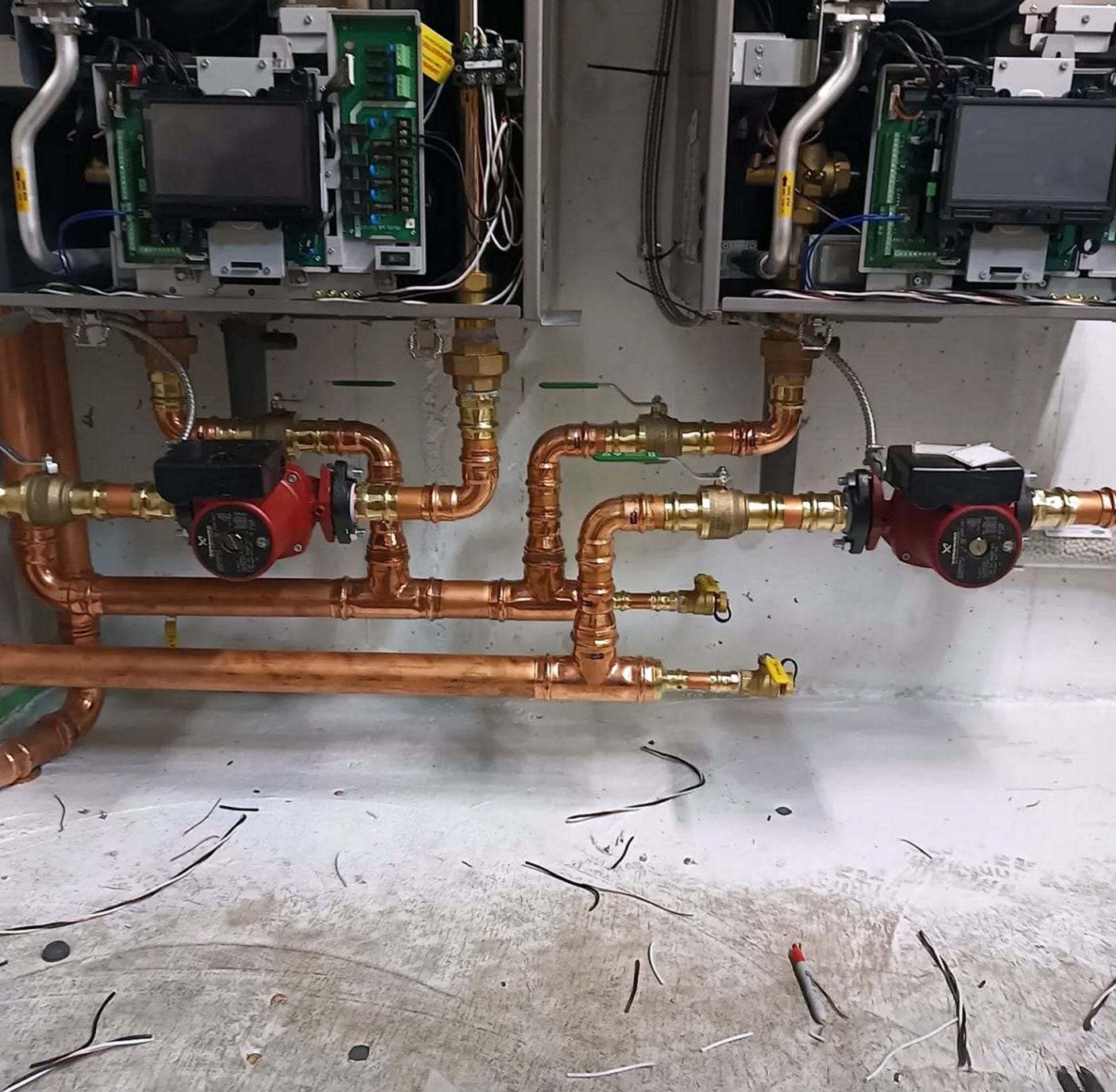
A boiler skips the filter changes, but radiator heat has a fall routine of its own, and half an hour before the first cold night covers it.
On a hot-water system, go around with a radiator key. A radiator that warms at the bottom but stays cool at the top has trapped air: open the small corner valve over a cup and close it once water spits out. Bleeding lowers the system’s pressure, so look at the boiler gauge afterward.
On a steam system, make sure the water shows in the boiler’s gauge glass and the glass is clean enough to read. On a one-pipe system, each radiator should tilt slightly toward its valve so water drains back; one that holds water bangs and spits.
Pull furniture and heavy drapes back from every radiator, and leave the burner, the flue and the safety controls to a technician: schedule the boiler’s yearly check before the cold sets in.